IRSA

Introducing the 65 Class rules

A part of the “mission statement” of the IRSA is to recognise and assist classes that have the potential to become a global competitive group.

While the RG65 class is well established across the world, the RG65 Class rules and class administration were not of a standard needed to satisfy the requirements to run “championships” (ie worlds, continental etc). To assist the class reach this goal, the IRSA Technical Committee has over the last couple of years:

1.created a draft set of class rules to the WS SCR format and thought to be in line with the current RG65 Class rules

2.developed a more specific set of class rules through direct contact, and then a dedicated forum, with the RG65 ICA and the wider RG65 community in general

The final product has now been published on the IRSA website here: https://www.radiosailing.org/classes/65class

To avoid confusion with the RG65 Class and its class rules in the care of the RG65 ICA, the new class rules have been named the 65 Class rules.

In principle any RG65 class boat can comply with the 65 Class rules, obtain 65 Class certificates for its equipment and join a class for which legitimate continental and world championships can be run.

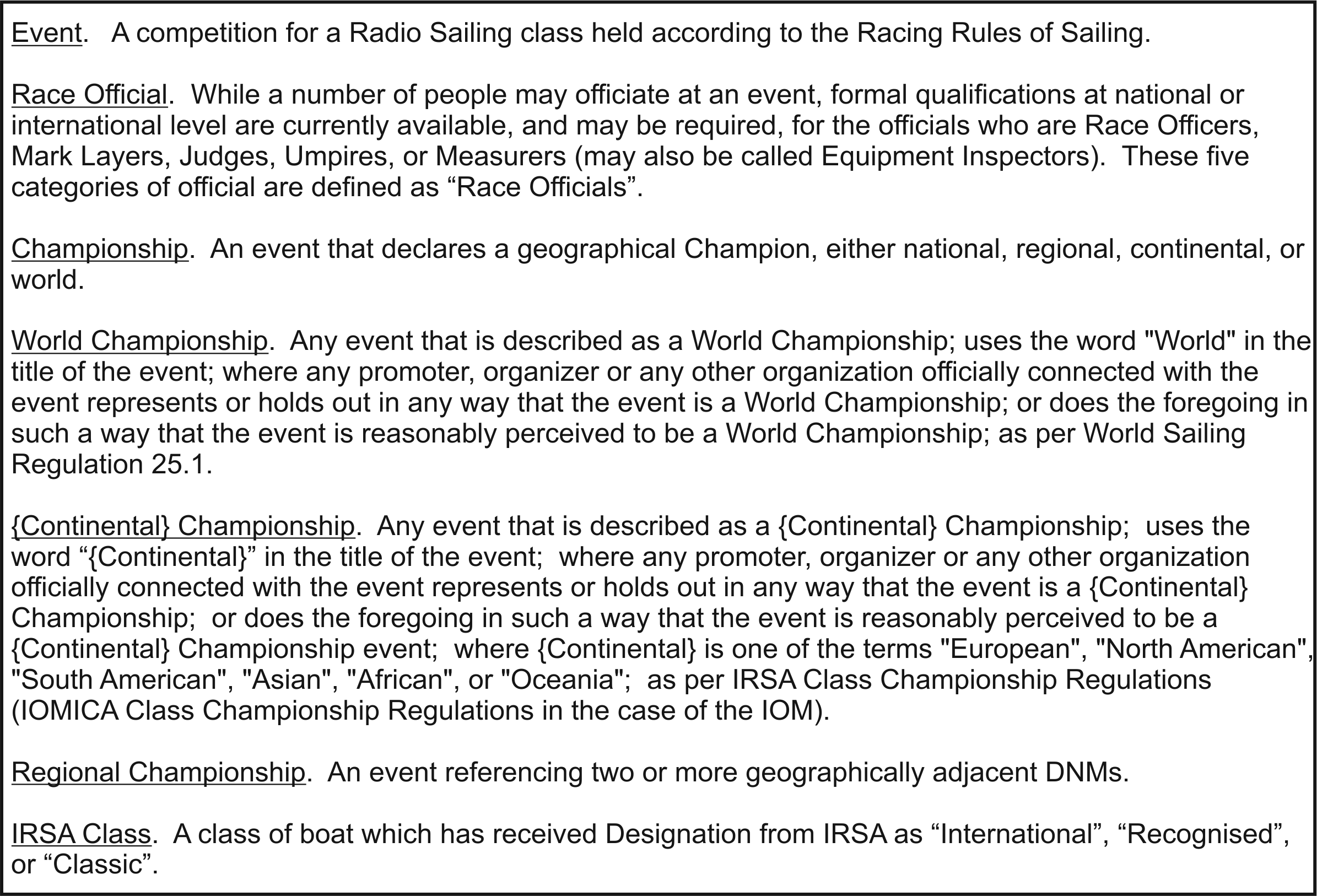
The holding of continental and world championships, ‘prohibited events’ and sailor eligibility within RC sailing (in general and not just for the RG65 class) is something which has attracted attention recently. For those who do not completely understand what is required when running or competing in championship (or “non-championship”) events, the IRSA is in the process of producing documents to clarify this for the RC community. Two of which have already been sent recently to the members to help with this rather confusing area.

IRSA Policy on Inclusion and Participation

There have been questions and discussion in recent times concerning what the situation is with “prohibited events” and how IRSA and WS view these events.

To accompany the recently published IRSA Policy on Eligibility and Prohibited Events, IRSA is pleased to announce its Policy on Inclusion and Participation.

This policy is to welcome, support, and reconcile all parties who wish to participate in IRSA events, and to assist event organisers to promote events which conform to the Racing Rules of Sailing.

Private File - Access Forbidden Private File - Access Forbidden

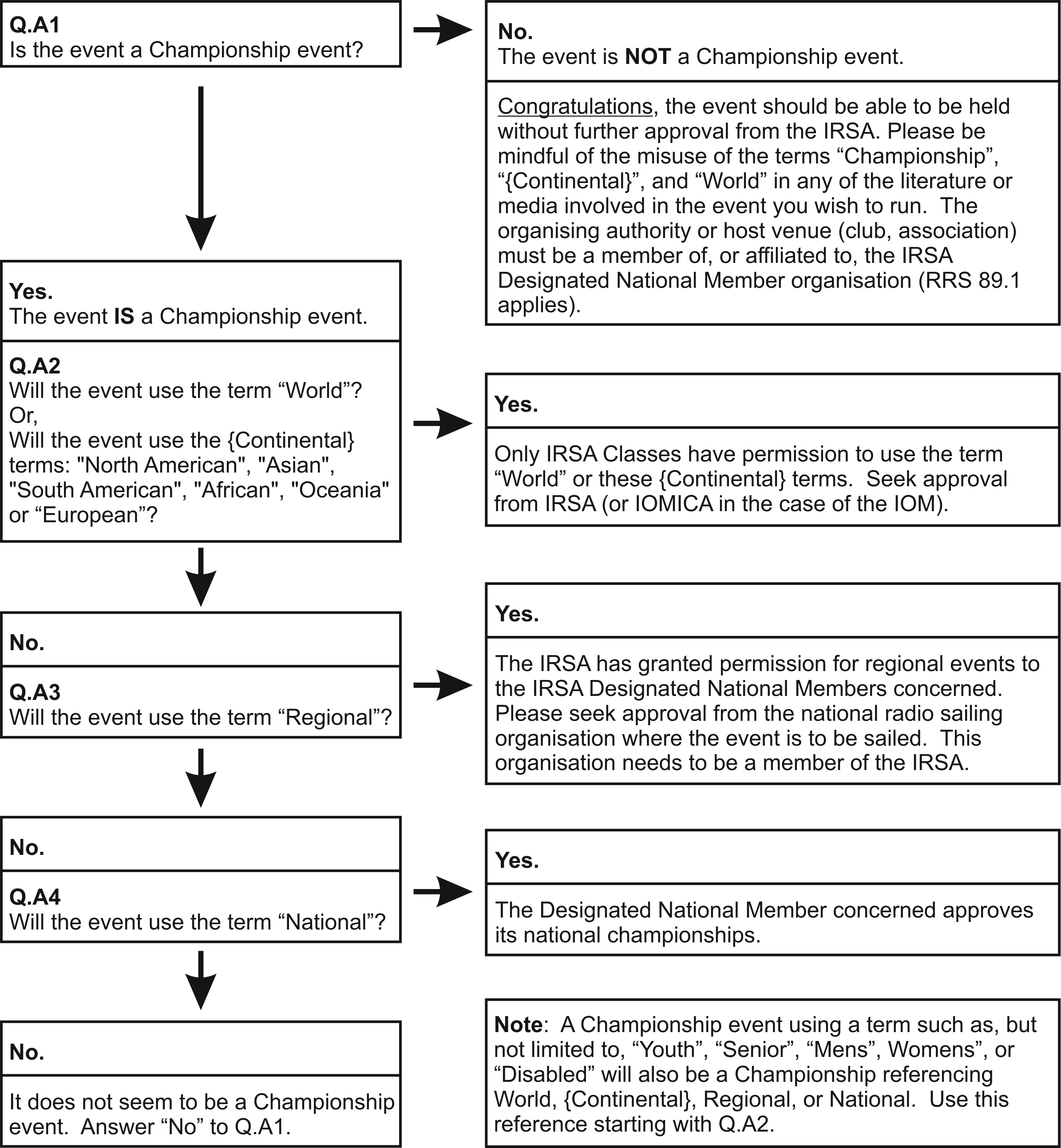
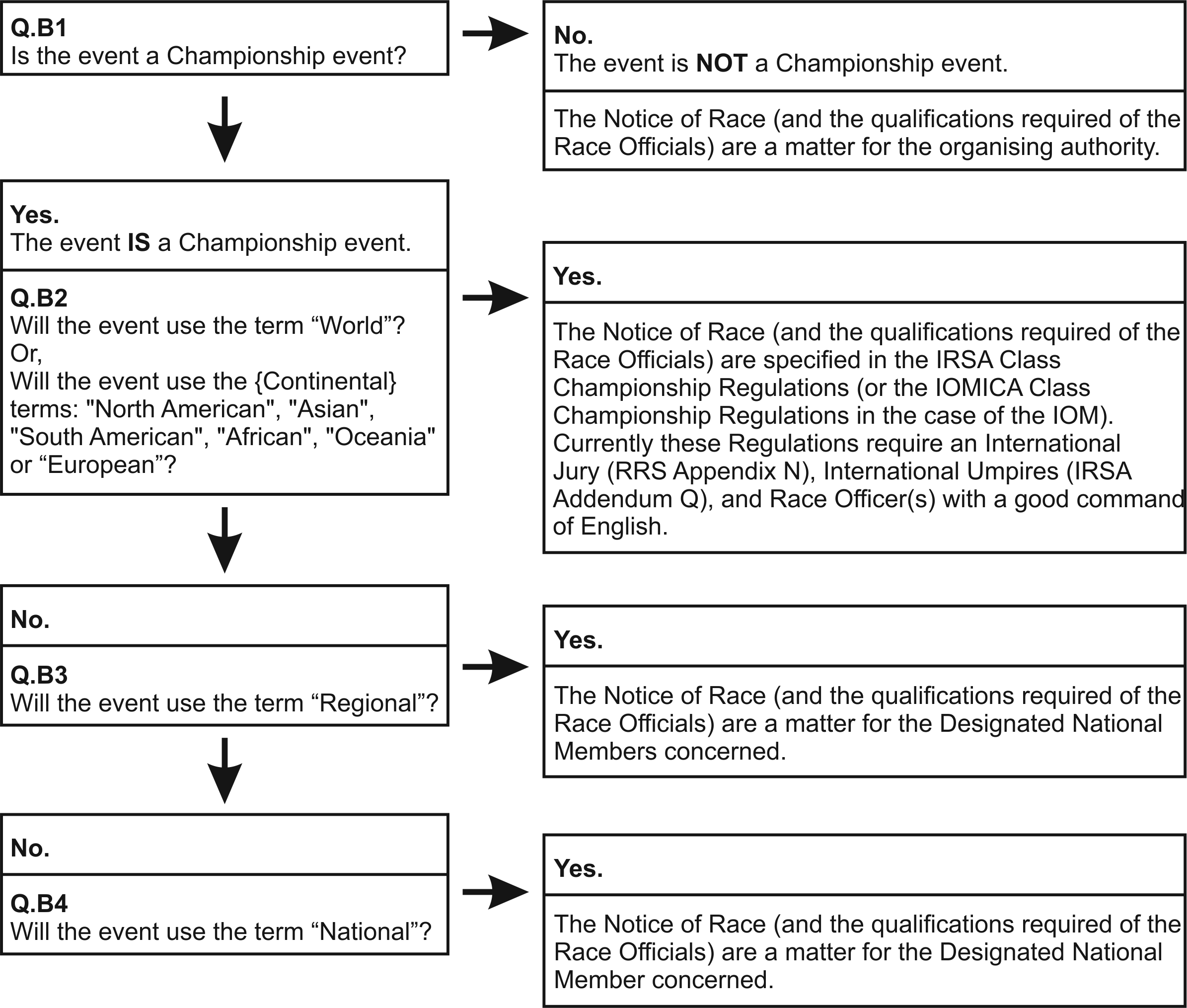
To further support this process, a Q & A document will soon be published on the IRSA site to help with what can and can’t be done with events. This is in the form of a “decision tree” and quickly helps event organisers/competitors understand the regulations.

New Member Austrian Sailing Federation

We have received an application for IRSA membership from the Austrian Sailing Federation / Österreichischer Segel-Verband ÖSV. They are an ISAF MNA, and so meet the requirements of Articles 5.1 and 5.2 of our Constitution.

The Austrian Sailing Federation application to become a member of International Radio Sailing Association has been considered by the Executive Committee and unanimously accepted.

We would like to welcome the ÖSV to the IRSA membership and look forward to assisting them and their organisation in promoting and developing the sport of radio sailing.

Revised class rules for 2018

The EC recently voted for the 2018 updated class rules which are now published and come into effect on 1 April 2018.

Main changes are on Terminology, RRS changes and ERS changes. Certification material will follow soon. NB Effective date: 1st April 2018.

{phocadownload view=category|id=81|text=IRSA A Class Rules 2018|target=s}

{phocadownload view=category|id=128|text=IRSA Marblehead Class Rules 2018|target=s}

{phocadownload view=category|id=105|text=IRSA Ten Rater Class rules 2018|target=s}

{phocadownload view=category|id=306|text=IRSA 65 Class Rules 2018|target=s}

Nominations are being called for the 2020 Twin World Championships (M, 10R)

The 2018 Twin World Championships will be run this year over May/June at Biblis, Germany. This is the second of the unique combination of championships, all starting in 2016 with the fabulous event in Italy.

The IRSA is now calling for nominations for the 2020 Twin Championships. It is hoped that the 2020 announcement can be made at Biblis.

The key documents for consideration are attached:


Constitutional Assembly, January 2018


In the run-up to the 2018 GA, the proposed constitution has failed to receive approval from the DNMs. This has led to a number of issues:

  • The current constitution continues to be significantly out of date on necessary housekeeping matters, at the least, such as the name change of ISAF to WS.
  • The current constitution is now significantly out of date on the current and future direction of IRSA in strengthening the governance and devolution of IRSA Classes.
  • The recently completed exceptional meeting failed to identify what the Membership considered constitutionally acceptable on the one hand and problematic on the other.
  • The meeting failed to make or consider any suggestions for addressing the problems perceived.
  • The meeting demonstrated significant disengagement by a “silent majority”, well over half of our DNMs, and their absence reduced the credibility of the constitutional change process.

As a consequence, the EC has resolved to call a second exceptional meeting under Article 10.1. This exceptional meeting will be informally called a “Constitutional Assembly” (CA). The CA will take place in the IRSA Forum in a board constructed specifically for the purpose, as was used for the 2016 General Assembly (GA). The CA membership and voting rights will be as for a GA. The CA will mainly use the GA rules of procedure, where it will consider proposals for constitutional change as notified in a previously circulated agenda. Importantly, the CA will be empowered to decide amendments to proposals by majority vote (instead of the 100% vote as would be required in a full GA). When the CA has approved a final revised constitution, the EC will call the GA which is due in 2018.

The proposed constitution is separated into sections and areas of change, and separate agenda proposals deal with each of these aspects of constitutional change in order that the CA may arrive at a set of constitutional changes which it approves.

This Constitutional Assembly will be run so that the Members, in participating can consider all aspects of the needed and suggested changes at the same time. This will save considerable time and the Members will then be able to discuss only those Constitutional items that they consider to be important. With the agreement of the other Members, it also allows them to add proposals to change the Constitution that they consider important. Members will be discussing items with other Members as well the Executive Committee. The Constitutional Assembly will expect the Members to be prepared to work quickly during the meeting and would suggest they be organised so that can happen.

This is a crucial and very important time for your International Association and the IRSA EC would hope and expect all Members to be involved.


IRSA